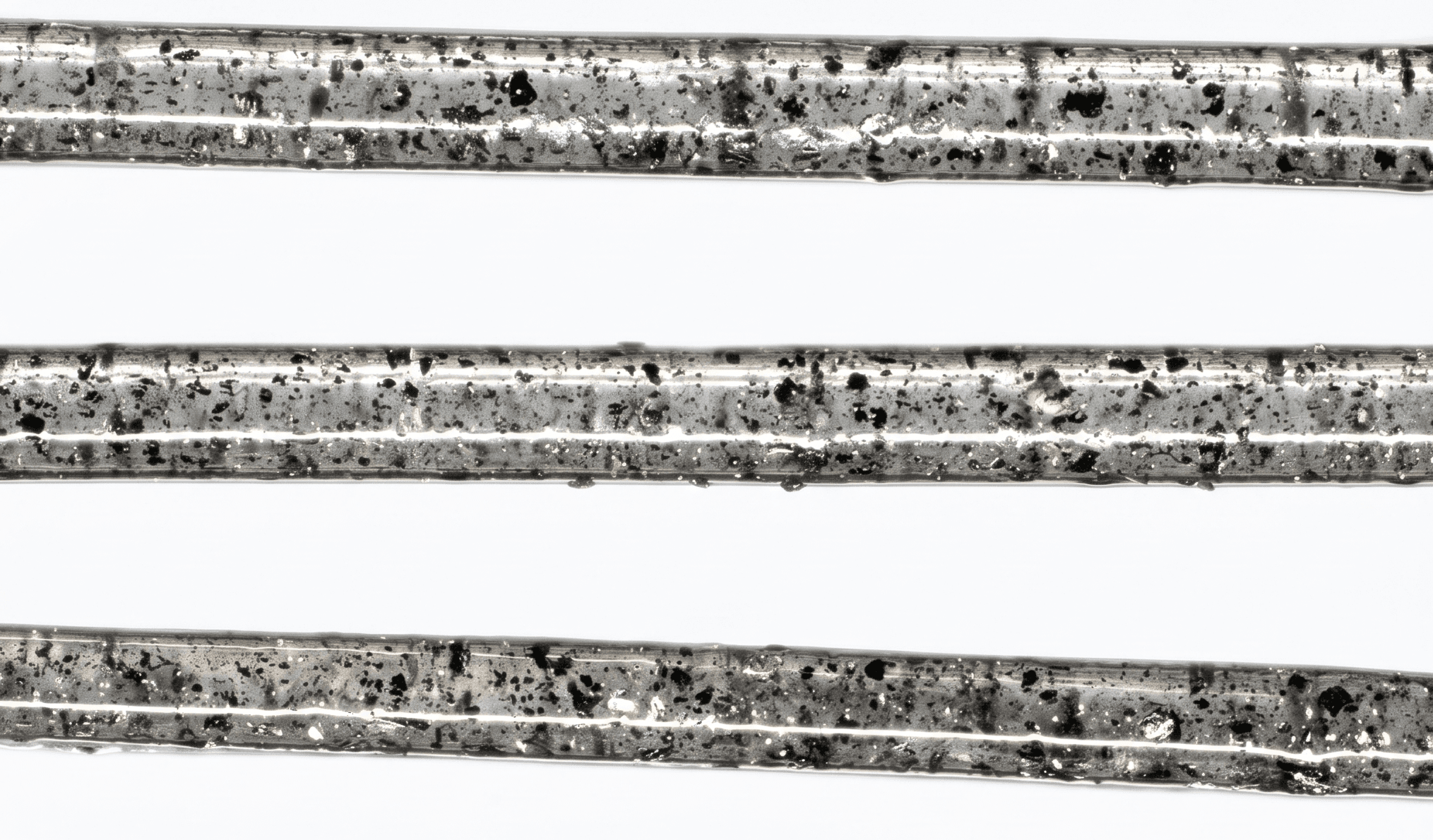
From passive filaments to engineered intelligent systems.
For more than a century, fibers were defined by what they were made of; cotton, polyester, nylon, aramid & etc.
Today, that definition is no longer sufficient. We are entering an era where a fiber is no longer just a structural unit of a textile, but a multifunctional engineered system capable of sensing, conducting, storing, reacting, and even communicating. In modern polymer science and textile engineering, the fiber is becoming the smallest programmable platform of functionality.
1. The Paradigm Shift: From Structure to Function
Traditionally, textile design focused on mechanical performance, strength, elasticity, durability. However, recent advances in polymer chemistry and nanomaterials have shifted the focus toward function integration at the fiber level itself.
Functional fibers are now designed to incorporate:
• Electrical conductivity
• Mechanical sensing
• Thermal regulation
• Energy harvesting and storage
• Chemical and biological responsiveness
This evolution is not incremental, it is structural. As highlighted in recent reviews, fibers are now being engineered as smart devices with integrated functionalities rather than passive carriers of them [2][5].
2. How Functionality is Built Into a Fiber
From a polymer engineering perspective, functionality can be introduced through three fundamental design strategies:
A. Intrinsic Functional Polymers
Here, the polymer itself is engineered to be functional. Examples include:
• Conducting polymers
• Stimuli-responsive hydrogels
• Ionic or piezoelectric polymers
These systems convert the fiber into an active material, where molecular structure defines performance [4].
B. Composite Fiber Engineering
Most high-performance smart fibers rely on composite architecture:
• Polymer matrix + additives
• Metal nanowires embedded in elastomers
• Phase-separated conductive networks
This approach enables simultaneous mechanical flexibility and electronic functionality, which is critical for wearable applications [8].
C. Post-Fiber Functionalization
In this approach, pre-formed fibers are modified via:
• Surface grafting
• Coating or dip-treatment
• Plasma or gas-phase modification
• Layer-by-layer assembly
This allows precise tuning of surface properties without compromising bulk mechanics [10].
3. The Real Breakthrough: Distributed Intelligence in Fibers
The most transformative concept emerging in the field is distributed functionality along a single fiber length.
Instead of point-based sensors, modern research demonstrates fibers that can:
• Detect strain at multiple locations
• Map motion across a garment
• Act as continuous sensing lines
This eliminates traditional wiring complexity and enables true textile-scale intelligence [9]. In essence, a fiber becomes a continuous sensing and data pathway, not just a material.
4. Why This Matters for Smart Textiles
Smart textiles are no longer defined by embedded electronics.
They are defined by how deeply intelligence is integrated into the fiber architecture itself.
The shift brings three major engineering advantages:
• Scalability: intelligence scales with fiber production
• Comfort: no rigid components required
• Integration: sensing, structure, and function unified
Recent studies show that fiber-based systems are now central to wearable health monitoring, energy systems, and structural sensing applications [1][8].
5. The Key Scientific Challenge
Despite rapid progress, one core challenge remains:
How do we design fibers that maintain mechanical integrity while hosting multiple active functionalities simultaneously?
This requires careful control of:
• Phase morphology in polymer blends
• Percolation networks for conductivity
• Interfacial adhesion between additives
• Long-term cyclic stability under deformation
This is where polymer science meets systems engineering.
Conclusion
We are engineering functionality directly into the fiber itself, at the molecular and nanoscale level, where polymers, nanostructures, and advanced additives define performance from within.
Through the strategic integration of functional additives such as conductive nanoparticles, phase-changing compounds, bioactive agents, and responsive fillers, the fiber is transformed into an active system rather than a passive material.
The fiber is becoming; A sensor, a conductor, a processor, and a structural element, all at once.
**References **
[1] Lu et al., Functional fibers/textiles for smart sensing devices and applications in personal healthcare systems, Analytical Methods, 2024.
[2] Chen et al., Functional Fiber Materials to Smart Fiber Devices, Chemical Reviews, 2022.
[3] Liu et al., Multifunctional nanocomposite fibers, Advanced Fiber Materials, 2023.
[4] Harito et al., Wearable polymer-based sensors, 2020.
[5] Zhu, Functional and smart fiber innovations, National Science Review, 2024.
[6] Lu et al., Smart fiber sensing textiles review, 2024.
[7] Iglesias et al., Functionalization of CNT fiber fabrics, 2019.
[8] Nanomaterials for smart wearable textiles, 2025 review.
[9] Hannigan et al., Distributed sensing along fibers, 2024.
[10] Chen et al., Design principles of fiber devices, Chemical Reviews, 2022.